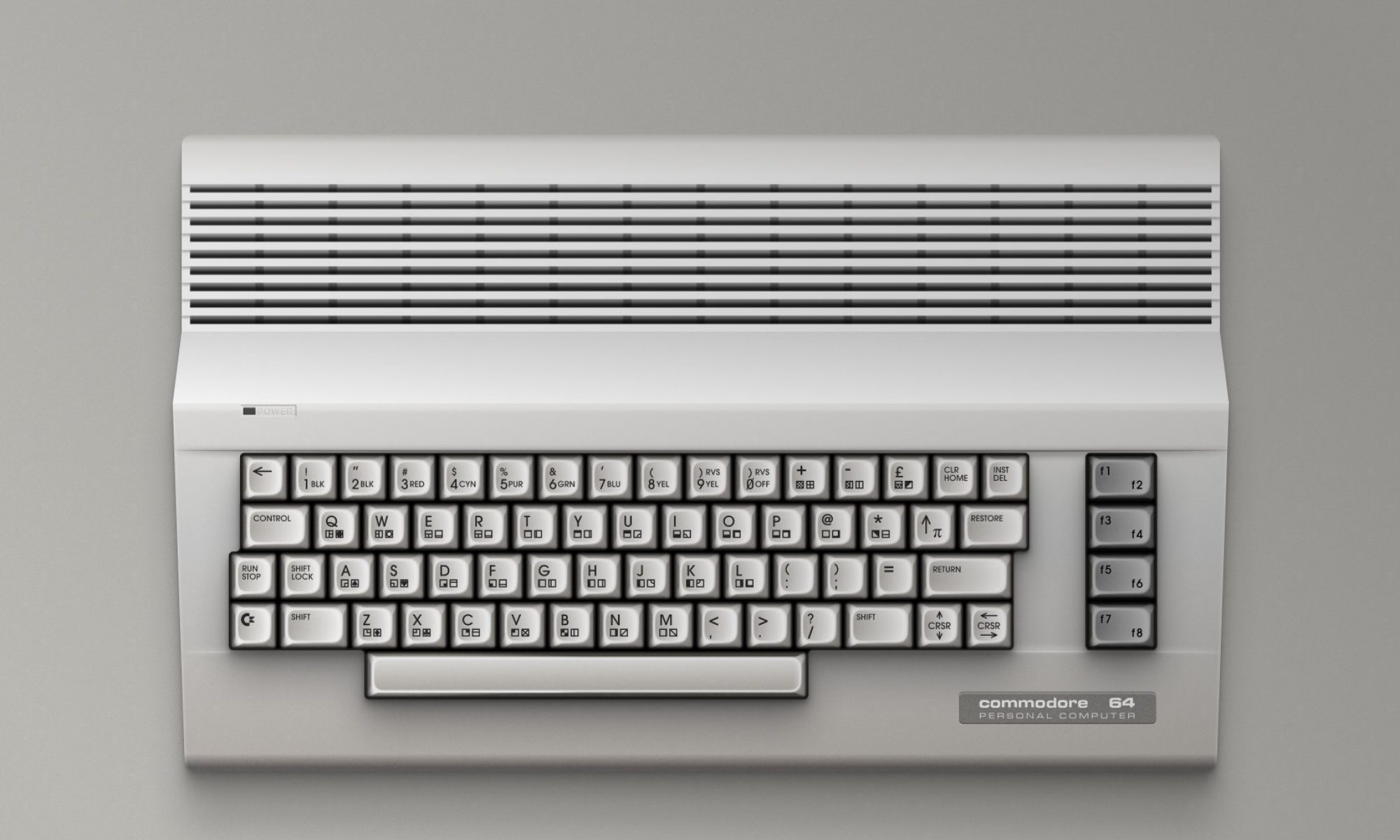

Little Computer People, also known as House-on-a-Disk, is a groundbreaking simulation game released in 1985 by Activision for the Commodore 64 and other contemporary platforms, including the ZX Spectrum, Amstrad CPC, Apple II, Atari ST, and later, in 1987, the Amiga.
Designed by David Crane and Rich Gold, it is widely regarded as a precursor to modern life simulation games like The Sims and Tamagotchi.
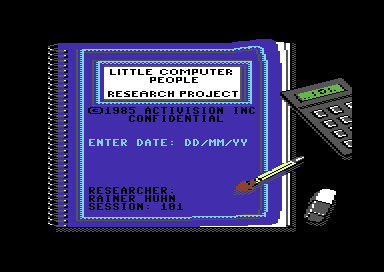
Unlike traditional games, Little Computer People lacks defined win conditions or specific goals, yet it delivers a captivating and innovative experience that was revolutionary for its time.
Game History and Concept
The concept of Little Computer People was both unconventional and visionary for the mid-1980s. The game’s documentation presents it not as a traditional software title but as a “house on a disk” (House-on-a-Disk), enabling players to interact with small humanoid beings, known as Little Computer People (LCPs), who “live” inside the computer. The player assumes the role of a caretaker, responsible for the LCP’s well-being while observing and engaging with their daily life.
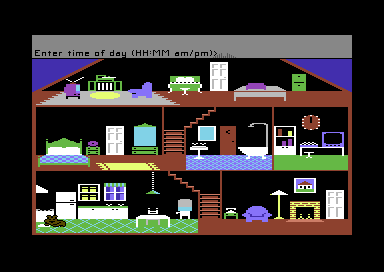
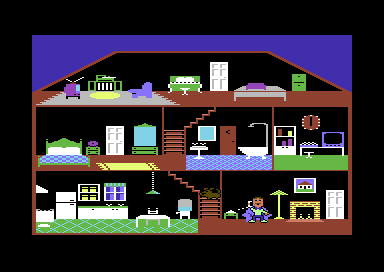
The game presents a side view of a three-story house, into which a randomly generated male character (often accompanied by a dog) moves. This character follows a daily routine, engaging in activities like cooking, watching TV, reading the newspaper, playing the piano, or sleeping. The player’s role is to ensure the LCP’s needs are met, such as providing food and water, and to interact with them through various commands and gestures.
Gameplay
The gameplay of Little Computer People is unique in that the player does not directly control the character but influences their behavior through commands and interactions.
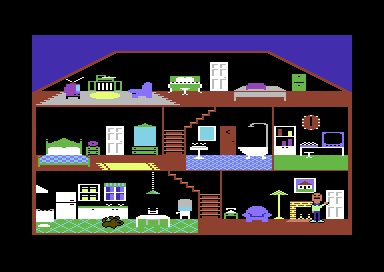
Key gameplay elements include:
- Providing Food and Water: The player must ensure the LCP and their dog are fed and hydrated, or the character may become weak, turn green, and eventually “die.”
- Issuing Commands: Players can input simple text commands, such as “please play the piano” or “please feed the dog.” The character’s responsiveness depends on their mood and the player’s politeness (e.g., using “please”). Non-compliant responses add a layer of personality to the LCP.
- Games: Players can engage the LCP in card games (like poker) or word games (like anagrams), providing entertaining challenges.
- Sending Gifts: Books, records, or other items can be sent to the LCP to boost their mood.
- Phone Calls and Head-Patting: Players can ring the phone (CONTROL+C) or pat the LCP’s head, which makes them happier.
The character’s mood is reflected in their facial expressions, ranging from happy and content to sad or sick. Neglect leads to sadness or illness, while positive interactions foster happiness.
Differences Between Disk and Cassette Versions
It’s worth noting that the Commodore 64 version came in two formats: disk and cassette. The disk version offered the full experience, including unique character generation, memory retention, and interactive features like card games. In contrast, the cassette version was significantly limited, generating a new character each time the game was loaded, lacking the “moving-in” animation, and missing features like card games or meaningful communication. As a result, the disk version became the more popular and celebrated iteration.
Technical Features
Little Computer People was an impressive technical achievement given the Commodore 64’s limitations. The game’s graphics are simple yet charming, with a colorful three-story house filled with animated objects that bring the environment to life. The black background enhances the visibility of the character and objects.
The sound design is equally memorable. The LCP can play various tunes on the piano, such as Chopin’s Waltz Op. 64 (“Minute Waltz”) or Mozart’s Piano Sonata in C Major, rendered through the distinctive sound of the Commodore 64’s SID chip. The cassette version, however, offered fewer sound effects and less interactivity.
A standout technical feature is the game’s unique character generation system. Each disk copy included a distinct “seed” number, ensuring that every player received a different LCP with a unique name and appearance. This innovation contributed to the game’s personalized and intimate feel.
Cultural and Historical Significance
Little Computer People was a pioneer in the simulation game genre. Released in 1985, it offered an unprecedented experience, allowing players to interact with a seemingly autonomous virtual being. This concept laid the groundwork for later titles like Tamagotchi and The Sims. Will Wright, the creator of The Sims, acknowledged Little Computer People as an inspiration, and Rich Gold, one of the game’s designers, provided feedback during The Sims’ development.
The game received widespread critical acclaim. In 1985, Zzap!64 magazine awarded it a Gold Medal, and Games magazine listed it among the top ten entertainment software titles of the year. Critics praised its originality and educational value, particularly for children, as it taught responsibility and caregiving in a playful manner.
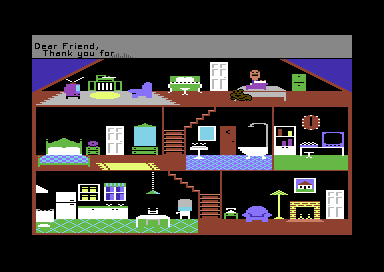
The game also resonated deeply with players, many of whom spent hours observing their LCP’s daily routines and formed emotional connections with their virtual characters. Anecdotes, such as players considering their LCP’s name (e.g., Wyatt) for their children, highlight the game’s emotional impact.
Discover more from The Universe of Commodore 64
Subscribe to get the latest posts sent to your email.
